 Moji Ninja
Kanji stroke order rules
Most kanji follow a few rules: write from top to bottom and left to right, horizontal before vertical when they cross, the centre before the sides, the outside before the inside, and close a box last. With these you can work out the stroke order of most new kanji.
The rules
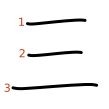
- Top to bottom. 三: the top stroke comes first.
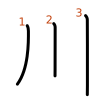
- Left to right. 川: the left stroke comes first.
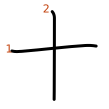
- Horizontal before vertical when they cross. 十: the horizontal comes first.
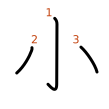
- Centre before sides. 小: the middle stroke comes first, then left and right. 水 works the same way.
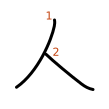
- Left-falling stroke before right-falling. 人: the stroke falling to the left comes first.
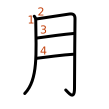
- Frame before contents. 月: the frame comes first, then the two strokes inside.
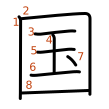
- Close a box last. 国: the bottom stroke comes after the contents. 田 works the same way.
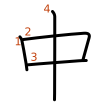
- A vertical that runs through everything comes last. 中: the middle vertical comes at the end.
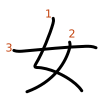
- A horizontal that runs through everything comes last. 女: the horizontal comes after the other two strokes.
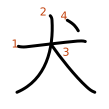
- A dot at the top right comes last. 犬: the dot comes at the end.
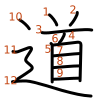
- The road part goes last. 道: the part 辶 is written after everything else.
Exceptions
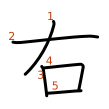
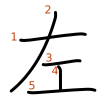
The rules are guides, not laws. The best-known exception is 右 and 左: both open with nearly the same strokes, but 右 starts with the slanting one and 左 with the horizontal. When in doubt, look at the diagram on the kanji's own page.
Why stroke order matters
The right order keeps a kanji's proportions, makes your handwriting legible and quick, and helps you remember it. Handwriting recognition relies on it too. Hiragana and katakana have a stroke order as well.
Frequently asked questions
Does stroke order matter?
Yes. It keeps a kanji in proportion, makes handwriting legible and helps your memory. A shared order also means others can read your quick writing.
Does the JLPT test stroke order?
No. The test is multiple choice and has no handwriting.
Is stroke order the same in Chinese and Japanese?
Often, but not always: some characters differ between the two, so follow the Japanese order if you are learning Japanese.
Where do the diagrams come from?
All the diagrams here are from the KanjiVG project.
Last updated