 Moji Ninja
Katakana chart with stroke order
Katakana (カタカナ) is the second Japanese script. It spells the same syllables as hiragana, but it writes loanwords such as コーヒー (kōhī, “coffee”), foreign names, sound effects, the scientific names of plants and animals, and words written for emphasis. Below are all 46 basic katakana with romaji and stroke order.
The katakana chart (gojūon)
Rows and columns work as in hiragana. Katakana marks a long vowel with a dash, ー: ケーキ (kēki, “cake”) — see small っ and long vowels.
| a | i | u | e | o | |
|---|---|---|---|---|---|
| – | アa | イi | ウu | エe | オo |
| k | カka | キki | クku | ケke | コko |
| s | サsa | シshi | スsu | セse | ソso |
| t | タta | チchi | ツtsu | テte | トto |
| n | ナna | ニni | ヌnu | ネne | ノno |
| h | ハha | ヒhi | フfu | ヘhe | ホho |
| m | マma | ミmi | ムmu | メme | モmo |
| y | ヤya | ユyu | ヨyo | ||
| r | ラra | リri | ルru | レre | ロro |
| w | ワwa | ヲwo | |||
| n | ンn | ||||
Katakana stroke order
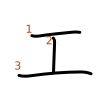
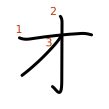
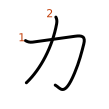
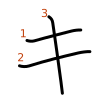
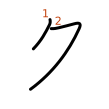
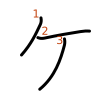
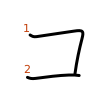
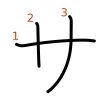
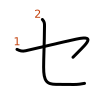
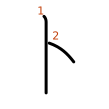
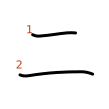
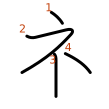
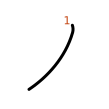
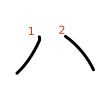
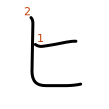
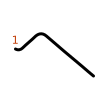
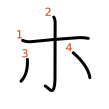
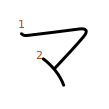
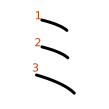
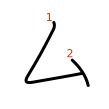
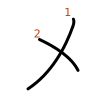
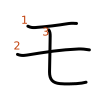
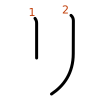
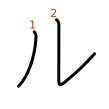
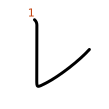
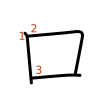
Katakana are more angular than hiragana and have fewer strokes — most have two or three.
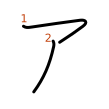
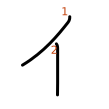
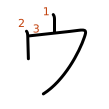
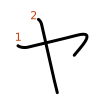
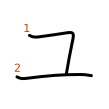
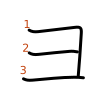
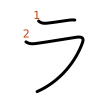
Katakana that look alike
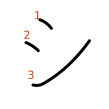
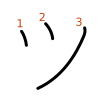
In シ (shi) the two short strokes sit one above the other on the left, and the long stroke sweeps up from the bottom left. In ツ (tsu) they sit side by side along the top, and the long stroke falls from the top right.
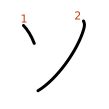
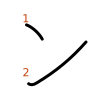
The same rule: the short stroke of ン (n) is flatter and its long stroke sweeps upward; in ソ (so) the short stroke is more upright and the long one falls downward.
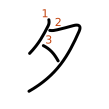
タ (ta) is ク (ku) with one more stroke inside; ケ (ke) has a horizontal stroke with a long stroke falling from it.
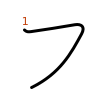
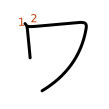
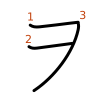
フ (fu) is a single stroke; ワ (wa) adds a short vertical on the left, and ウ (u) a dot on top as well.
The bottom stroke of ユ (yu) sticks out past the vertical; in コ (ko) it doesn't.
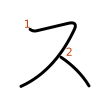
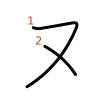
The second stroke of ヌ (nu) cuts across the first; in ス (su) it only leans out.
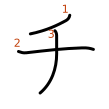
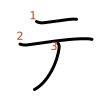
The long stroke of チ (chi) crosses the horizontal line; in テ (te) it hangs below it.
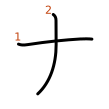
ナ (na) is a horizontal line with a stroke falling through it; メ (me) is two slanting strokes that cross.
How to learn katakana
If you know hiragana, you already know the sounds — only the shapes are new. Learn a row a day, drill the lookalike pairs above, and read real words: menus, brand names, foreign names. Many learners can recognise all 46 katakana in one to two weeks. Then: dakuten, yōon, and extended katakana for sounds like fa and ti.
Frequently asked questions
How many katakana characters are there?
There are 46 basic katakana. As in hiragana, dakuten and handakuten add 25, the small ャ, ュ and ョ make 33 combinations, and extended combinations such as ファ (fa) and ティ (ti) write foreign sounds.
What is katakana used for?
Loanwords (テレビ, “TV”), foreign names and countries, sound effects, the scientific names of plants and animals, and emphasis, much like italics.
Should I learn katakana after hiragana?
Yes. The sounds are the same, so katakana goes faster once you know hiragana. Without it you can’t read menus, brand names or many modern words.
Why are シ and ツ so easy to confuse?
They look almost the same. The difference is the direction of the strokes: the long stroke of シ sweeps up, the long stroke of ツ falls down. The same goes for ン and ソ.